
Wells to tank, on watch around the clock
A municipal water system used to mean driving between three sites, starting and stopping pumps by hand, and finding out about problems after they had already grown. This one runs itself and calls when it needs a human. It is one project, designed and delivered by SCADA MASTERS on Davicom hardware, and the next one will not look exactly like it.


Wells, plant and tank . system in service
The whole system on one page: the wells, the plant and the ground tank, each level, each pump, the fill cascade along the bottom. Served by the Davicom CORTEX itself. System in service, utility identity removed.
The short answer
How do you monitor and automate a municipal water system?
Every water system is different, so the design is sized to the utility in front of us. In the project shown here, a Davicom CORTEX at the treatment plant reads every site and decides when each pump runs, with a compact Davicom NEURO at the wells and another at the ground tank wired into the local pumps and sensors. The three sites talk over a private serial loop, so there is no carrier contract, no SIM card and no monthly fee. Each pump pair alternates lead and backup on every cycle, a called pump that does not deliver hands over to its partner and pages the operator, and two pumps of a pair are never run together. When the level reading cannot be trusted, the fill stops on a ceiling instead of running blind.
Three sites, one private serial loop, no cellular
Water is drawn at the wells, chlorinated at the plant, and stored in a ground tank that feeds distribution. A Davicom CORTEX 320 at the plant is the brain: it reads every site, decides when each pump runs, and reaches the on-call operator the moment something needs a human. A compact Davicom NEURO sits at the wells and another at the tank, wired into the local pumps and sensors.
The three sites talk over a private serial link. There is no carrier contract, no SIM card and no monthly fee anywhere in the system. The remote sites push their own status changes the moment they happen, the unit at the plant polls the tank level and the link beacons, and all alarming is centralised at the plant.
 The wells
Davicom NEURO
Two well pumps alternating lead and backup, an emergency call button, AC, DC and door watched.
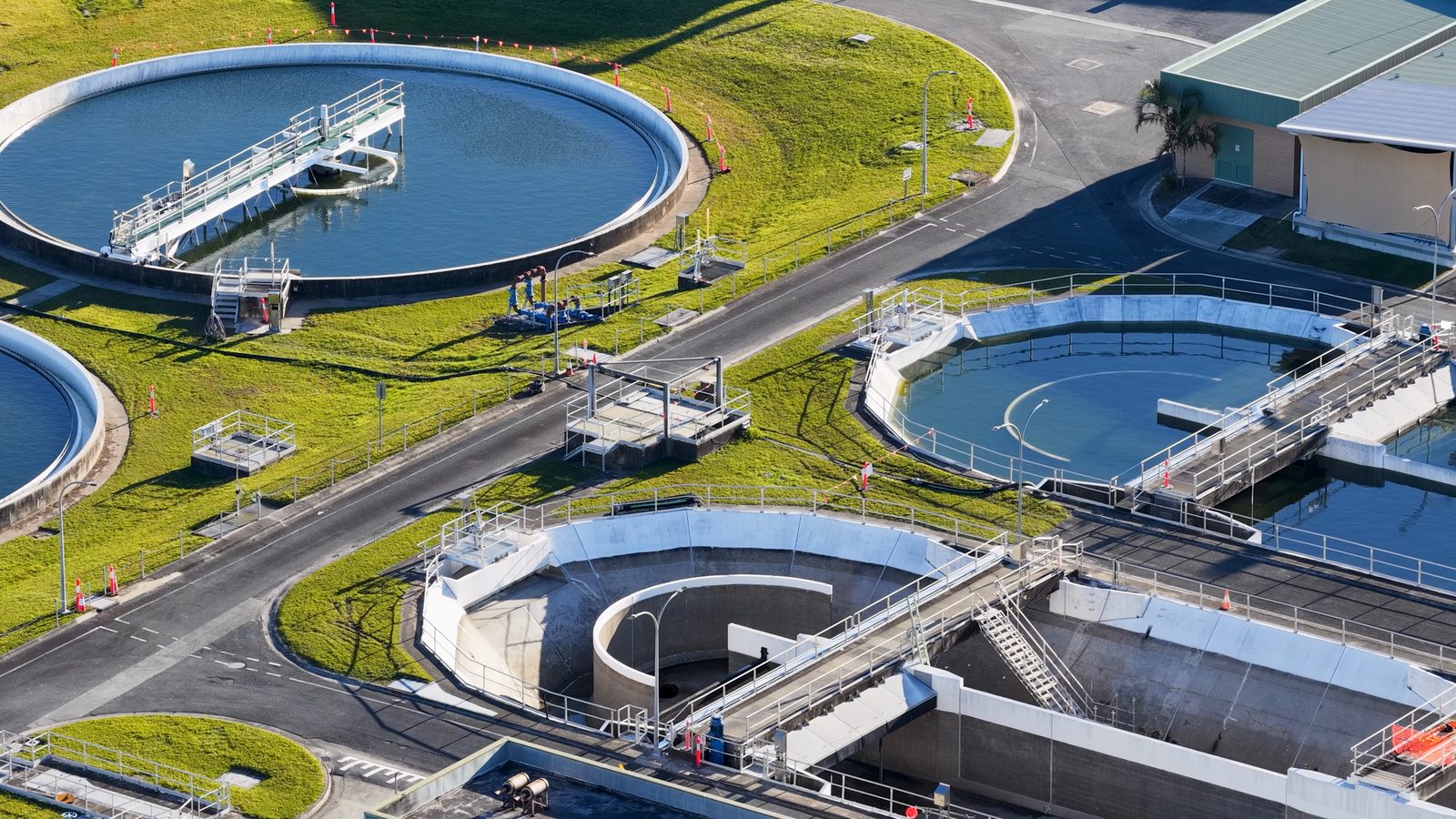 The plant
Davicom CORTEX 320The brain
A chlorine contact tank, flow paced chlorination, the transfer pumps and an outdoor sounder for call-outs.
 The ground tank
Davicom NEURO
Storage that feeds distribution, level read as pressure, and an assist request button.
One private serial link
Every reading, every status push and every pump command on the same private serial link.

It runs the pumps, and it knows when not to trust itself
Each pump pair alternates lead and backup on every cycle, so both motors age at the same rate instead of one doing all the work. If a called pump does not deliver, the system switches to its partner by itself and pages the operator: the water keeps moving while someone drives in.
Two pumps of a pair never run together. That is a hydraulic constraint, not a preference, and it is written into every rule that starts a pump.
The part that matters most is the doubt. If the link to the tank goes quiet, the level reading stops being trusted rather than being believed: the fill stops on a ceiling instead of running blind, and a reliable low reading is what starts it again. The measurement stays the truth.

Lead and backup swap on every cycle.
The partner pump takes over, the operator is paged.
Two pumps of a pair are never called together.
A level that cannot be trusted stops the fill instead of driving it.
When there is more than one system, the alarms come together in Mosaic
One system answers for itself, and it serves its own web page from the unit at the plant. A utility running several systems needs somewhere to look first. Mosaic is that place: every site on one map, every alarm in one list, and the site it came from named in its own column.
Each unit keeps deciding locally, which is what makes a water system survive a bad link. Mosaic sits above them and consolidates.
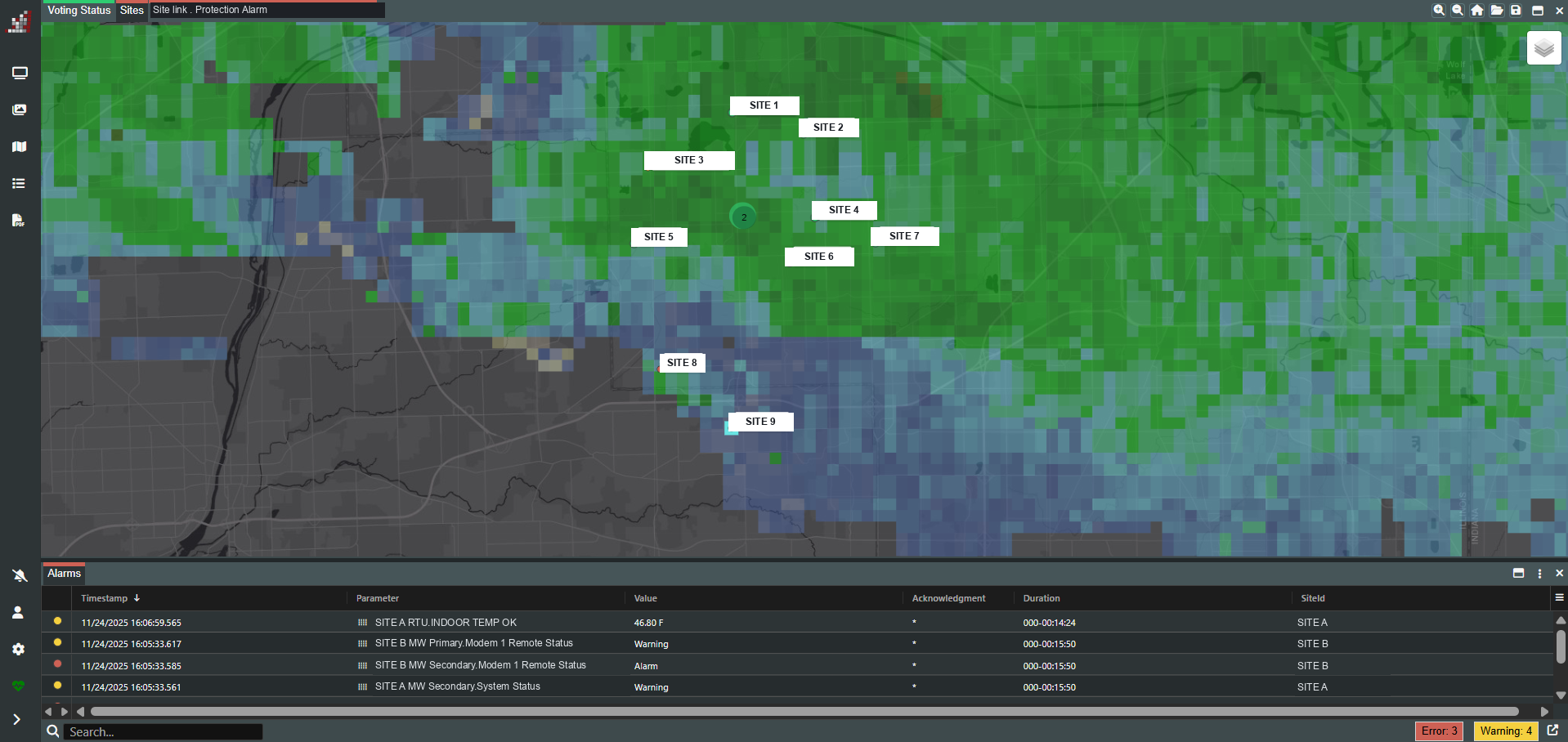


Sites of one network on a single map, the alarm list that gathers them, and the history behind any one of their readings. Network in service, site identities removed.
This is one project, not a template
No two water utilities have the same sites, the same pumps or the same rules. This system has three sites on a private serial loop because that is what suited the ground, the distances and the budget. Another will have a different count of sites, a different link between them, pumps of a different size, and rules written for its own hydraulics.
What carries from one project to the next is the method, not the drawing: read what matters at each site, decide on site so a bad link cannot stop the water, and bring every alarm to one place. The units, the I/O count and the logic are then sized to the system in front of us, with the integrator who knows it.
One plant and two remote sites here. Two, five or a single building elsewhere.
A private serial loop here, because no carrier contract was wanted. Radio, fibre or IP where they fit better.
A Davicom CORTEX where the decisions are made, a Davicom NEURO or an AXON where the I/O count is smaller.
Alternation, failover and hydraulic guards written for this system. Yours are written for yours.
The system does not only run the pumps. It knows when its own reading cannot be trusted, and stops rather than filling blind.
Questions we get asked
Can Davicom run the pumps, or only watch them?
Both. The unit at the plant reads every site and decides when each pump runs: it alternates lead and backup on every cycle, calls a partner pump when a called pump does not deliver, holds the hydraulic rule that two pumps of a pair never run together, and pages the on-call operator when something needs a human.
Does a multi site water system need cellular or a monthly service?
Not necessarily. The system shown here links its three sites over a private serial loop: no carrier contract, no SIM card and no monthly fee. The remote sites push their status changes as they happen and the plant polls the levels and the link beacons.
What happens if a site stops answering?
The reading from that site stops being trusted. Rather than running on a stale level, the fill stops on a ceiling and the operator is told, and a reliable reading is what starts it again. The unit at the plant keeps deciding and logging locally in the meantime.
Is every water system built like this one?
No. This one is a project, designed and delivered by SCADA MASTERS on Davicom hardware, and it is shown because it is in service and because it can be shown. The number of sites, the link between them, the pumps and the rules change with the utility. What stays is the method: read what matters at each site, decide on site so a bad link cannot stop the water, and bring the alarms to one place.
Who designs and installs the system?
This one was designed and delivered by SCADA MASTERS on Davicom hardware. Davicom supplies the units and the configuration support behind the integrator, who owns the site work and the first line relationship with the utility.
Need help, or ready to purchase?
Call us
1 877 282-3380Get in Touch
Ready for the next step? Schedule a call or demo with a member of our sales team or quickly and easily request a quote.
Get startedSupport Portal
Find solutions and useful resources like articles, downloadable datasheets, manuals, software, workspaces and more.
See moreFind a Dealer
Find a Davicom authorized dealer. Our dealer locator provides the most up-to-date information on dealers close to you.
Find a dealer