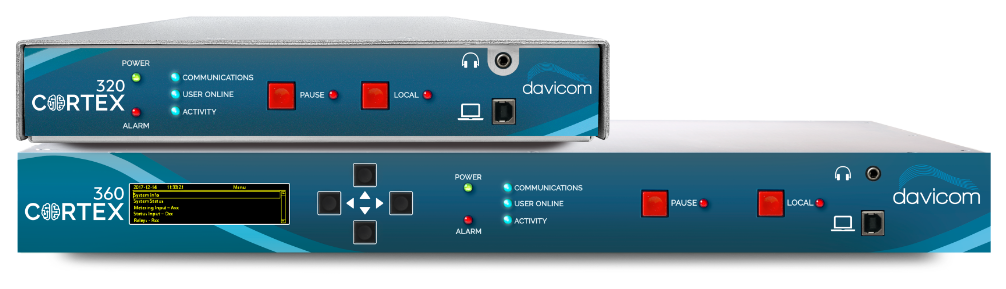
Remote radio and telecom sites are generally monitored through a device
called a Remote Terminal Unit (or RTU). Historically, these devices could measure dry
contact inputs and analog voltages to check them periodically for abnormal levels. When a
problem was detected, the RTU could send an alarm to pre-defined locations by telephone or
remote contact closures.
Modern RTU’s can connect to almost any type of on-site device through
dry contacts and analog voltages but also through different interconnection protocols such
as SNMP or MODBUS. In addition, they can send alarms by email, text message, SNMP Trap or
Smartphone notifications.
Besides simply monitoring levels or devices for alarm conditions, modern
RTU’s also allow technical personnel to remotely control on-site equipment. This
greatly facilitates remote diagnostics and can save of repeat visits to a site.
A smart RTU, like Davicom’s Cortex Series can even take over and
control site devices automatically to reset or power-cycle flaky equipment, to start a
backup device without requiring outside attention and even to reboot a network element if
it stops responding.
Smart RTU’s make remote telecom sites more resilient, robust and
reliable thereby ensuring that critical communications infrastructure can do what it is
supposed to do when it is required